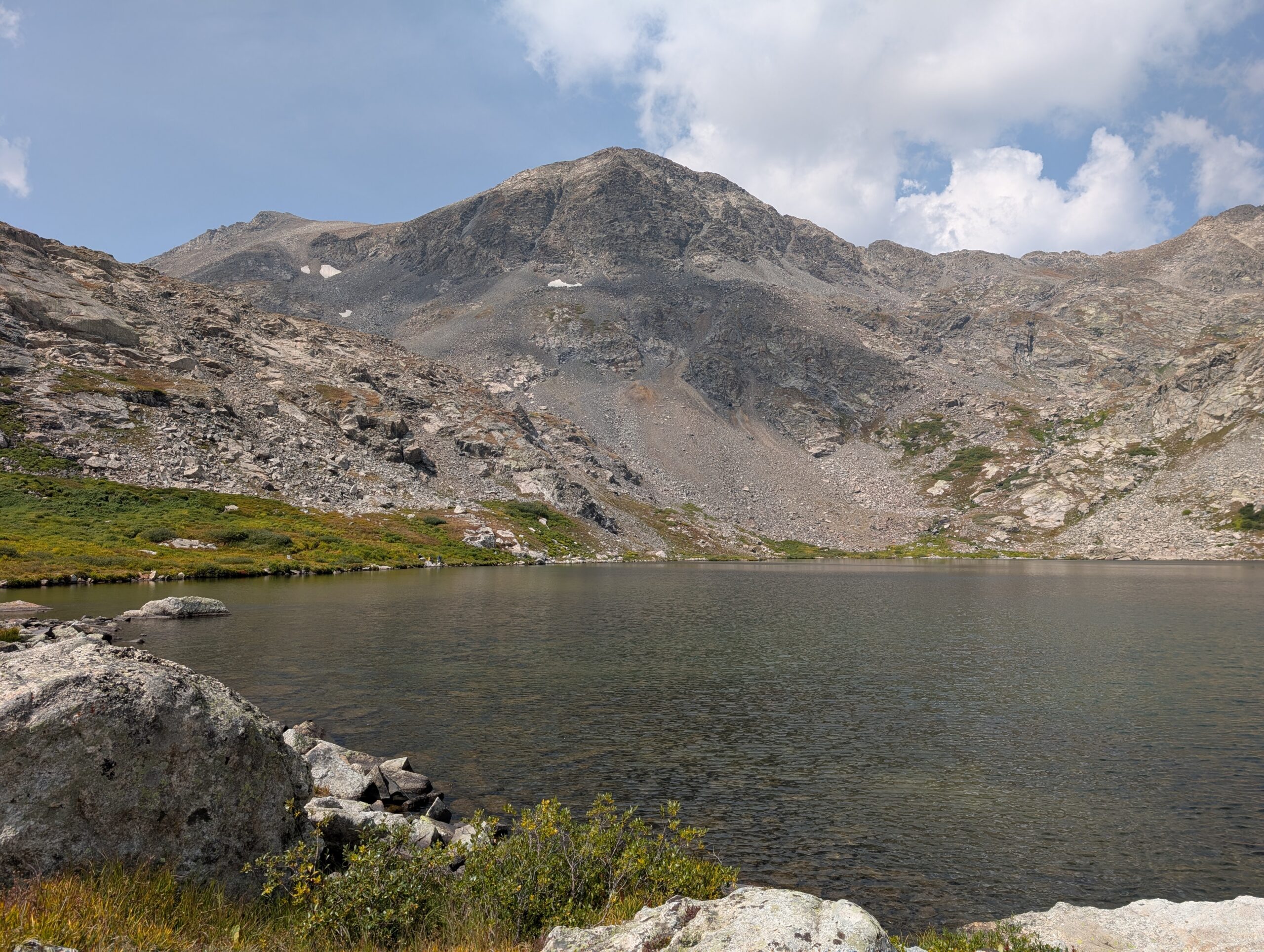
Before a recent run up Wheeler Lake, I watched YouTube clips of the V-Notch and built a mental model for the line I’d take. At the obstacle I noticed a newly smoothed ramp to the left and took it. Later I learned the ramp had been created without authorization by someone tied to a nearby mining claim. Colorado Offroad Enterprise (CORE) then obtained permission to close the trail October 3–5, 2025, brought in an excavator, removed most of the fill, touched up drainage, and reopened the route “to its original difficulty.” Seeing a crew use heavy equipment so a trail would stay hard is what grabbed me.
That decision makes sense once you look at how motorized trails are managed. The U.S. Forest Service uses “Trail Fundamentals,” “Designed Use,” and Trail Management Objectives to define each route’s intended character, difficulty, and sustainability. Restoration in this context means keeping a trail within its documented design, not maximizing passability for every vehicle. If an obstacle is altered outside that design—by rock stacking, a user-made bypass, or imported fill—authorized stewards can remove the changes to bring the tread back into spec.
Legally, creating an “easy line” wasn’t the claimant’s call to make. On National Forest System lands, any operation that might cause significant disturbance of surface resources requires at least a notice of intent and, when warranted, an approved plan of operations. On Bureau of Land Management lands, operators must prevent “unnecessary or undue degradation,” and “casual use” is limited to negligible surface disturbance, which mechanized earthmoving on a public trail usually exceeds. In short, a mining claim doesn’t confer blanket authority to regrade a public route.
A brief example illustrates why “making it harder” can be good stewardship. Suppose a signature rock step is filled to create a ramp. The easier move draws more, and less-equipped, vehicles. Traffic increases, drivers start cutting around congestion, and soon you have parallel braids and widened tread. Drainage breaks down, ruts deepen, and maintenance needs spike. Returning the obstacle to its prior form can reduce braiding and keep use aligned with the trail’s intended vehicle class and experience. That was the logic at Wheeler: the goal wasn’t “hard for hard’s sake,” it was “back to intended.”
Bottom line, I think CORE’s restoration was justified. The ramp was unauthorized, it shifted the designed experience, and it risked resource impacts that the land manager is obligated to prevent. Restoring the V-Notch preserved the trail’s identity and sustainability while respecting the framework that keeps high-alpine 4×4 routes open.