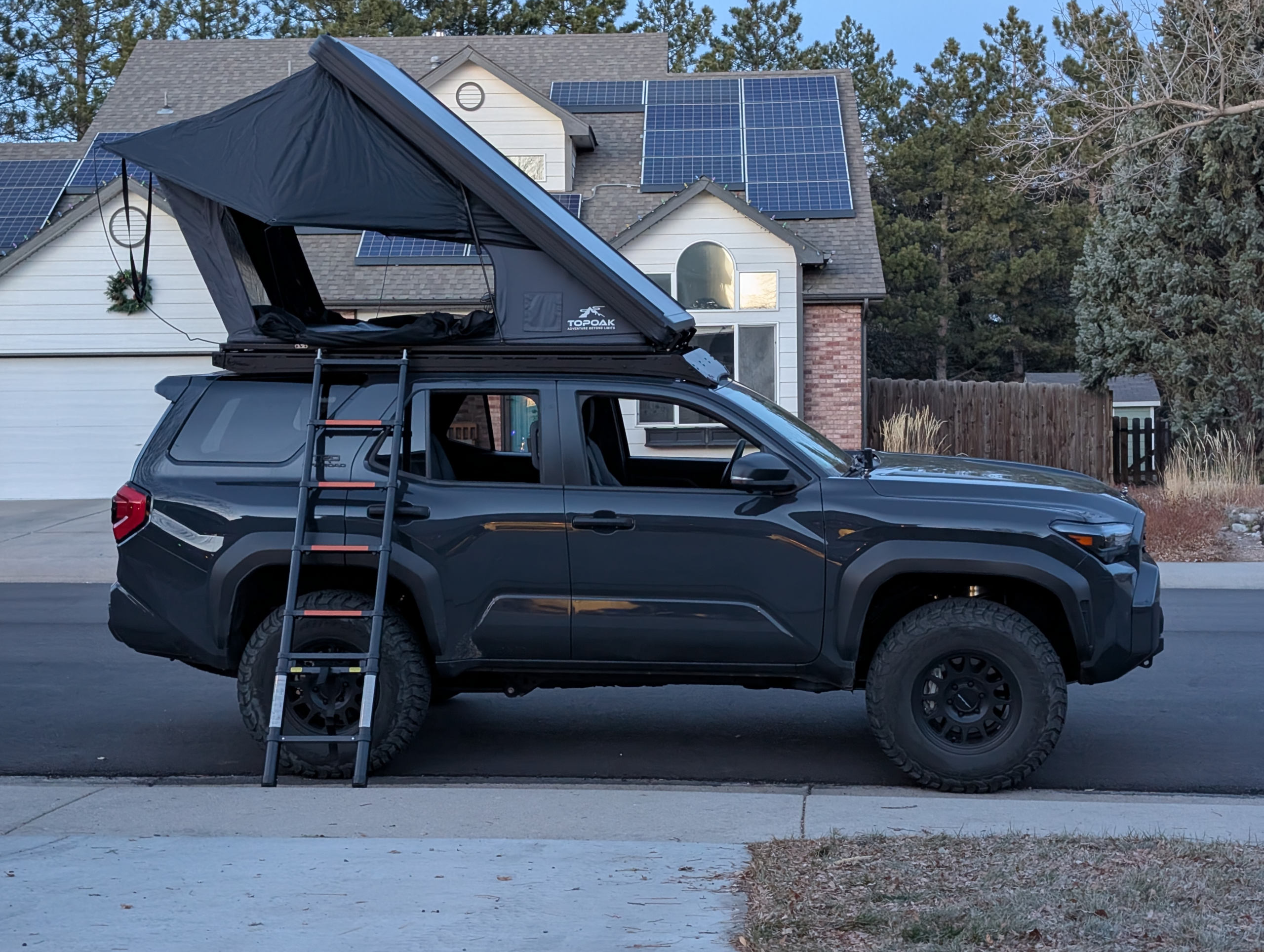
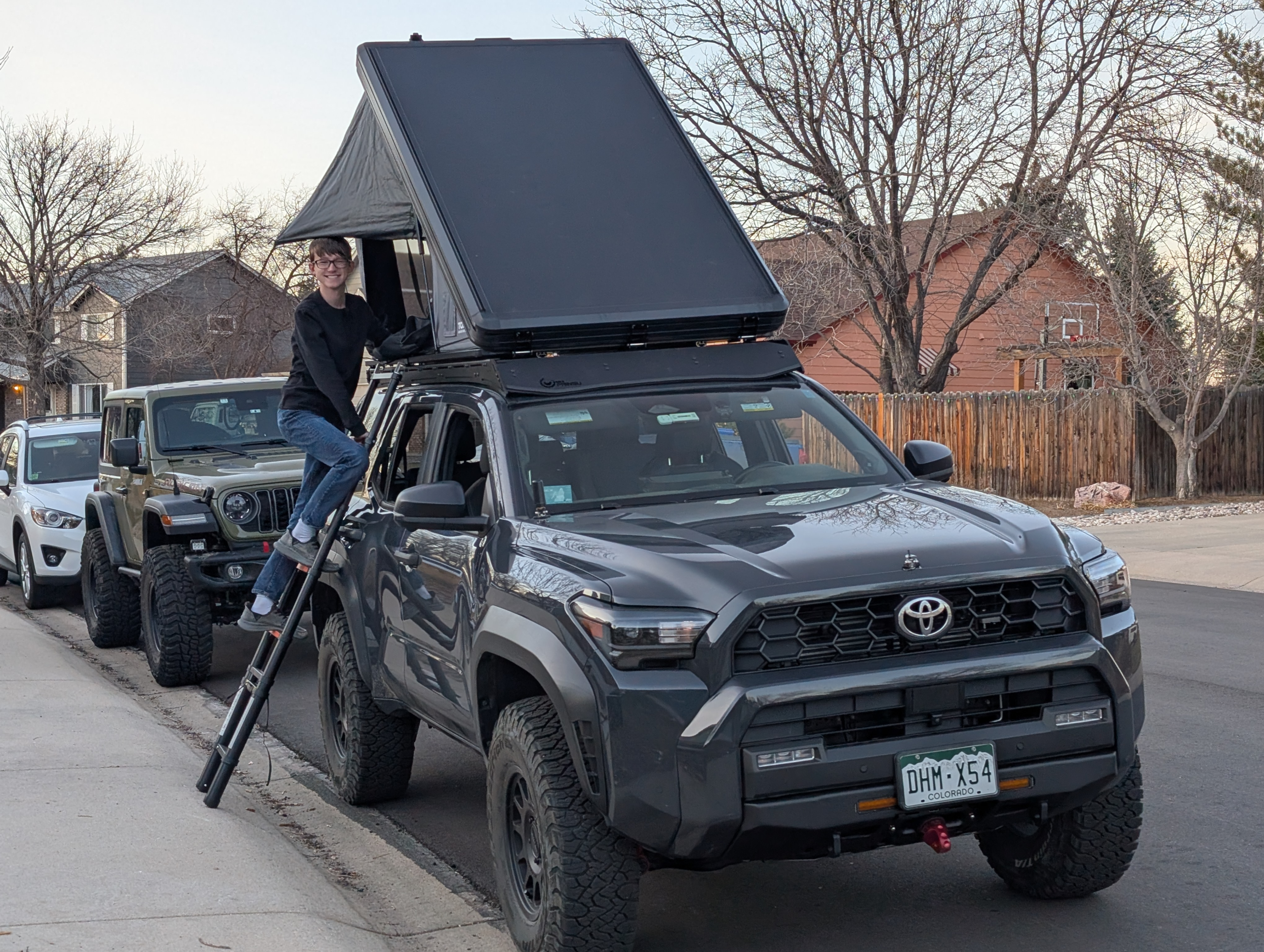
We installed a Topoak Galaxy Light rooftop tent (RTT) on our 2025 4Runner using a Prinsu Pro roofrack. The tent had been sitting in the garage for a while, just waiting on the rack to show up. Once everything was here, the whole project was straightforward, it was just time-consuming and a little awkward because of the size and weight of the parts.
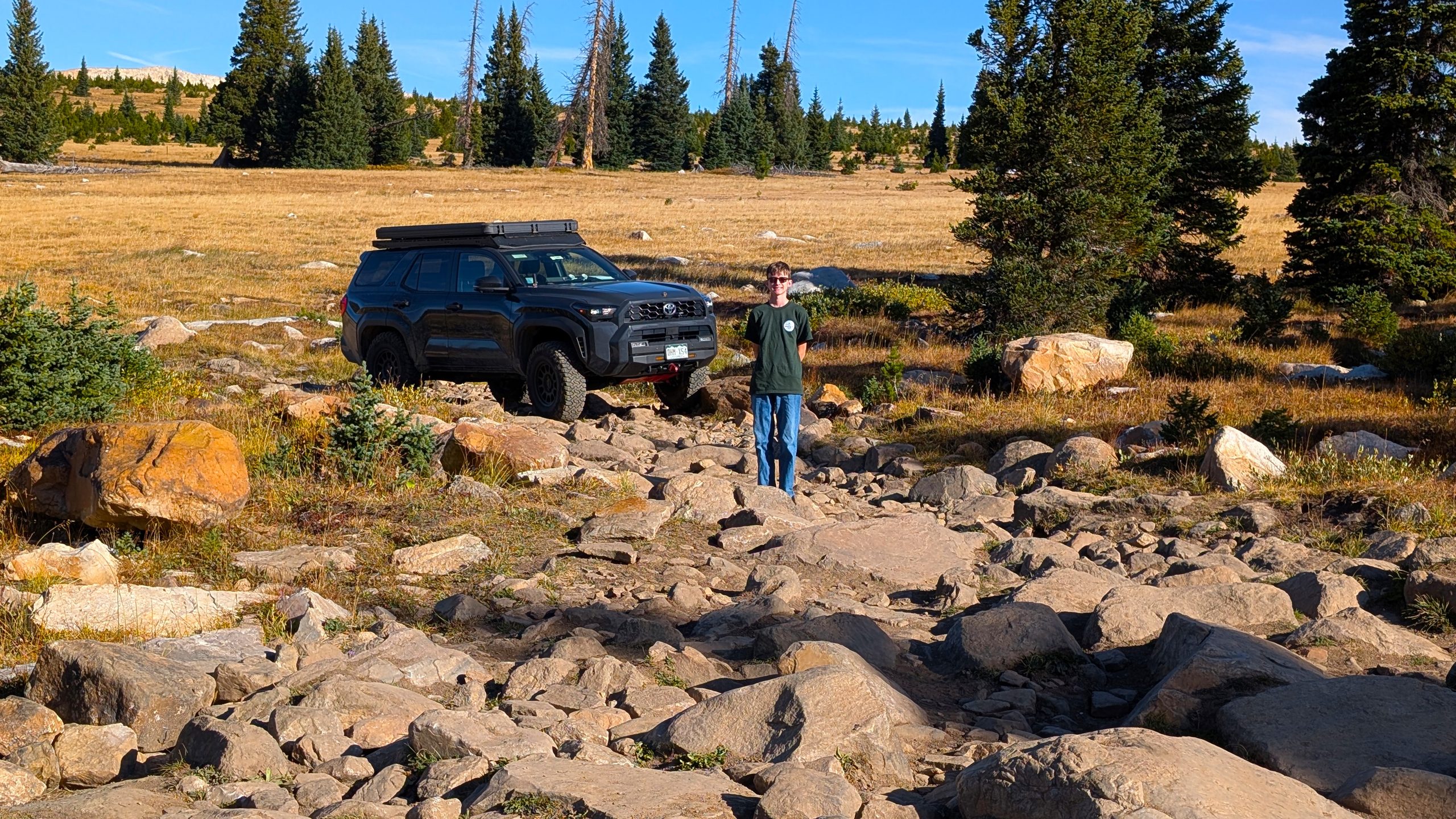
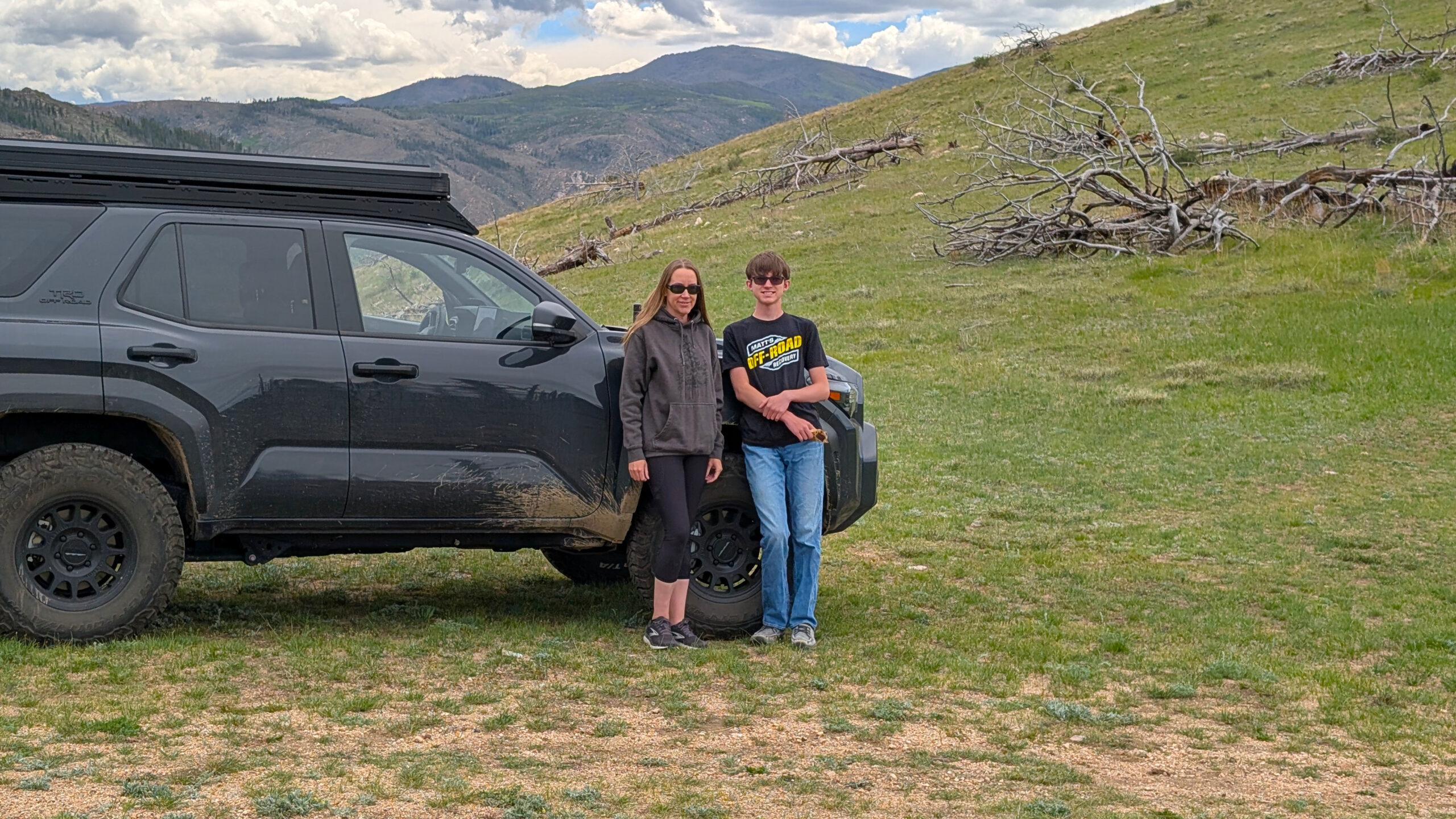
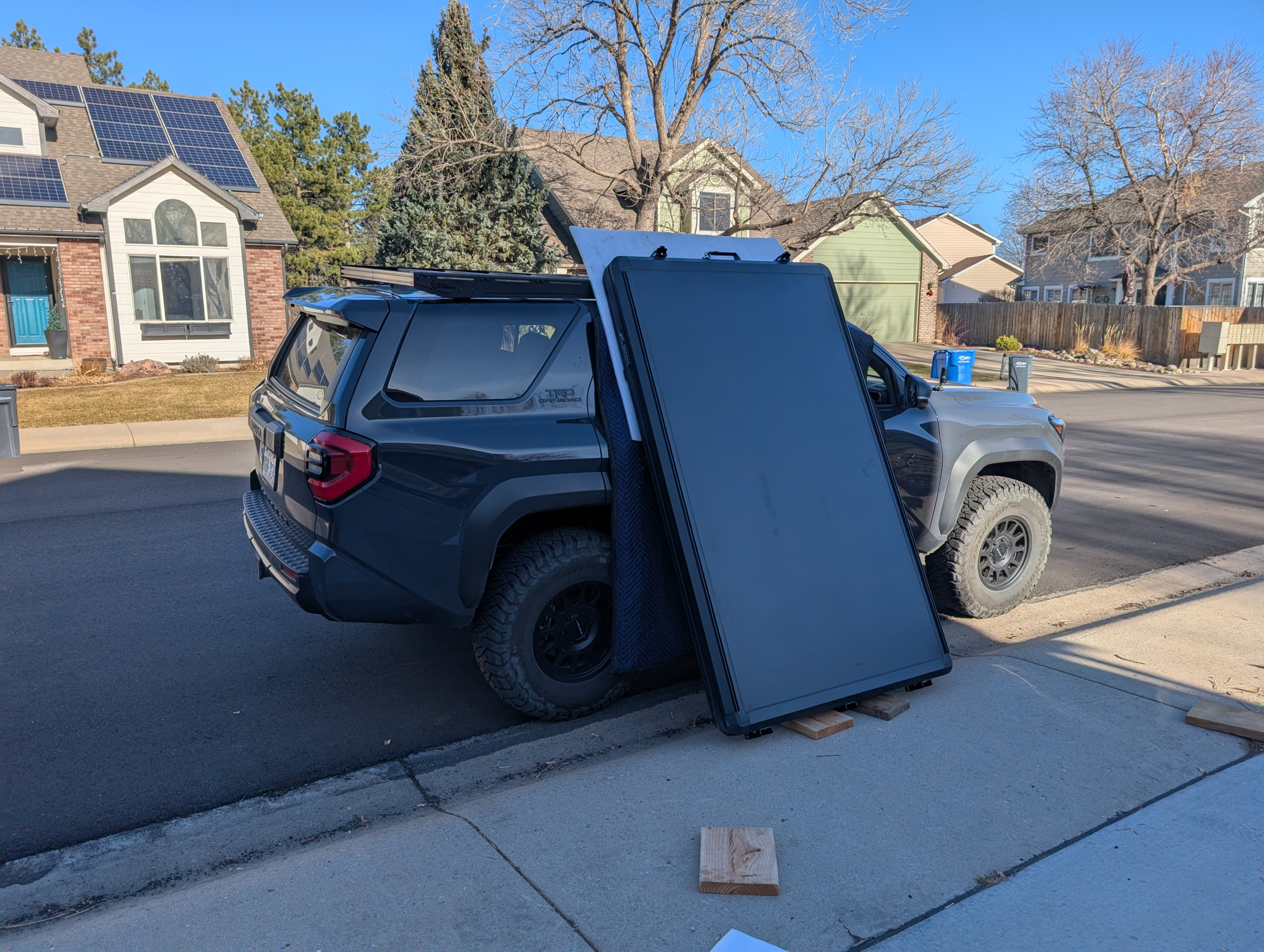
Once the rack was installed, mounting the tent was the easy part. My son and brother helped me lift the RTT onto the roof, which I’d recommend unless you’re comfortable moving bulky, expensive stuff solo. I used some thick packing foam to protect the roof during positioning, and moving blankets would work even better. With the tent on the rack, I mounted it using the included hardware and initially positioned it flush to the rear of the rack, leaving a gap at the front.
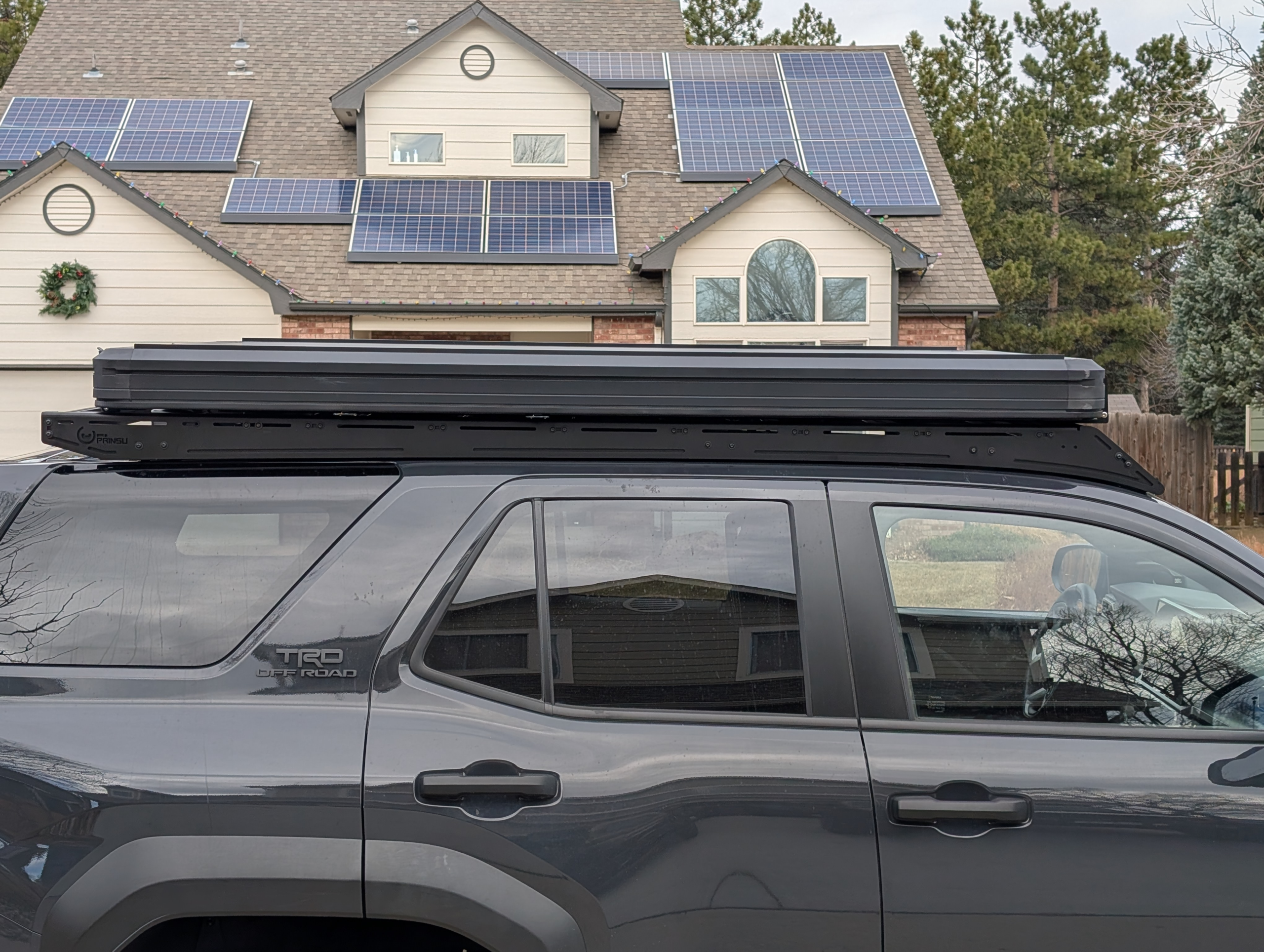
That rear-flush position worked mechanically, but it created two practical issues. First, the rear hatch contacted the tent’s support poles when opening. Second, it was noisy at speed. The hatch interference could probably be solved either by mounting the tent farther forward or by limiting how far the hatch opens, but moving the tent forward ended up being the cleaner solution for multiple reasons, so that’s what I did.
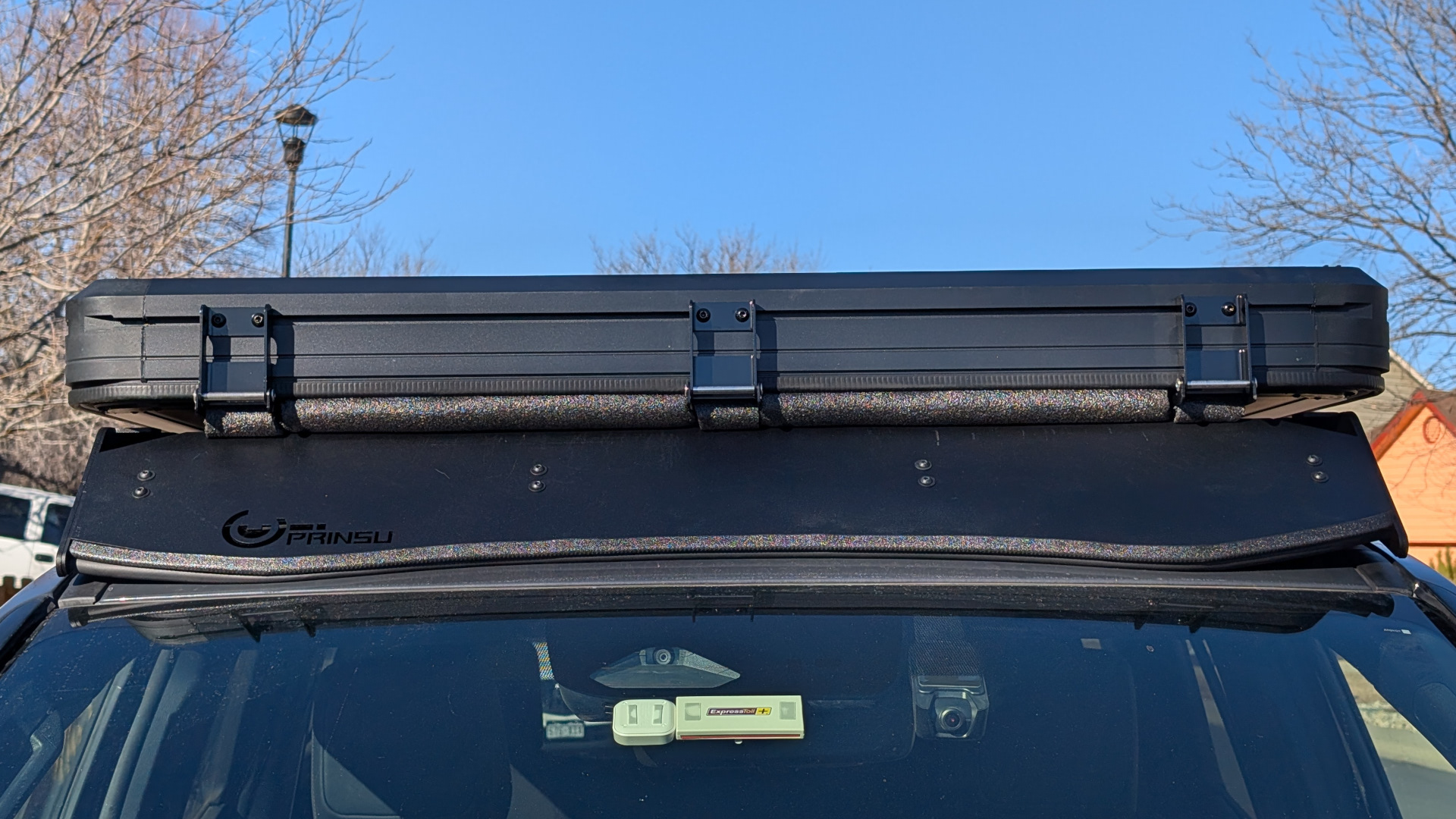
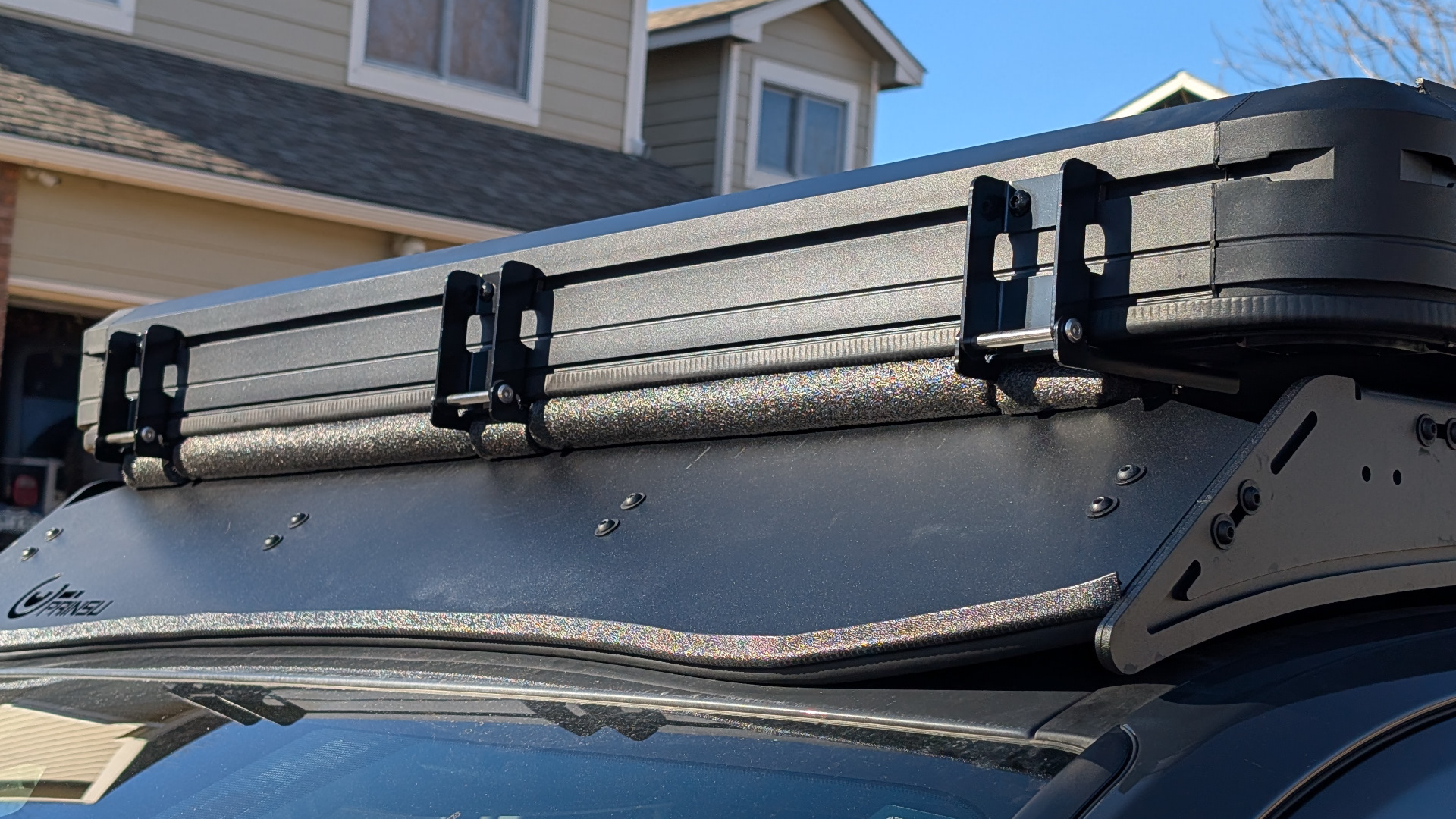
After shifting the RTT forward, the hatch clearance improved and the wind noise dropped a lot, but I still had an annoying high-pitched whistle on the freeway. That ended up being caused by airflow through the gap between the front of the RTT and the rack’s wind deflector area. To confirm the cause, I temporarily stuffed some packing foam into that gap, and the whistle went away immediately. Once I knew exactly what needed to be blocked, I switched to a more durable solution: foam backer rod, the inexpensive round foam you can buy in hardware stores for sealing joints before caulking.
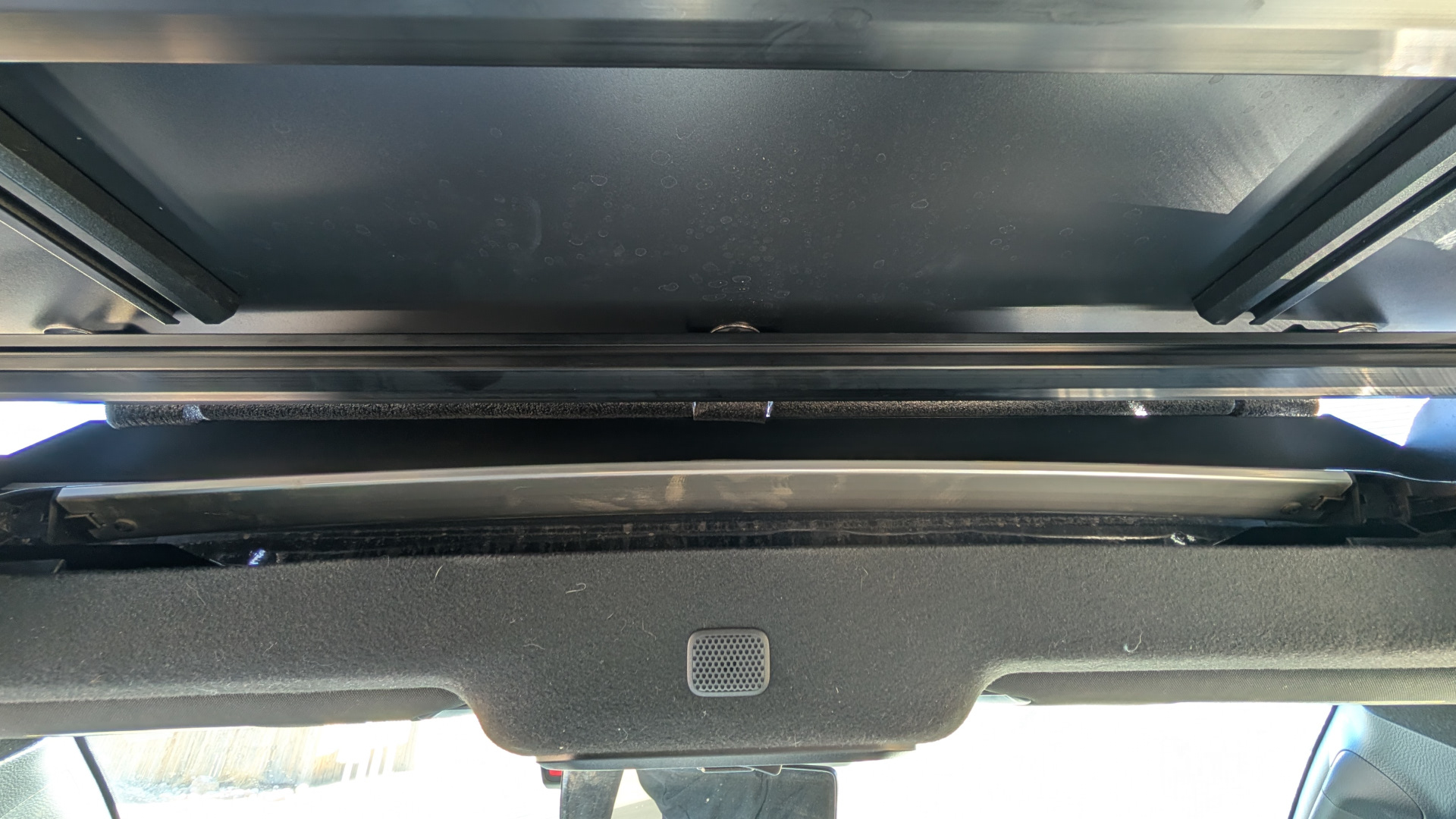
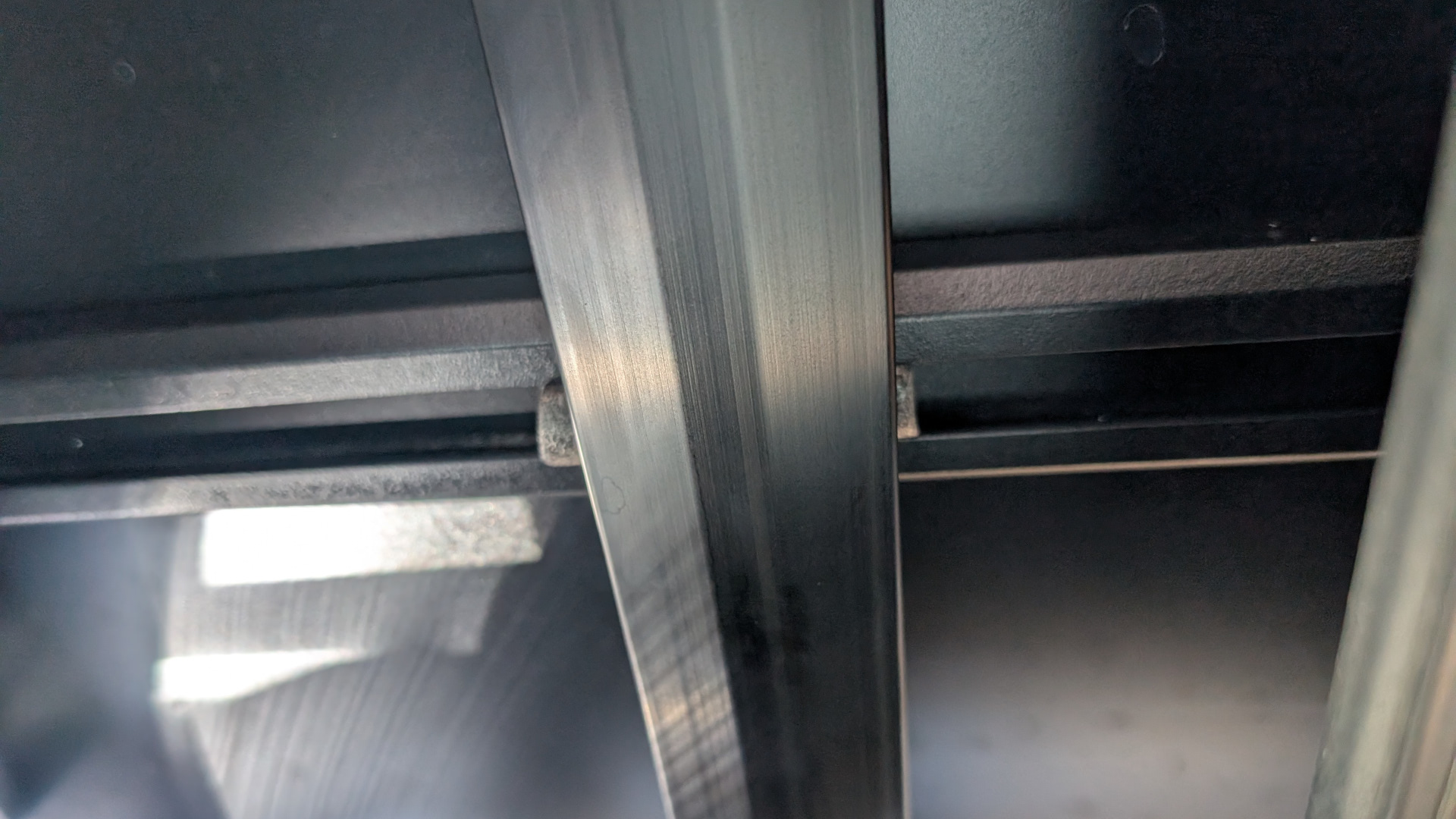
Backer rod solved both the whistle and a minor rattle I was hearing between the RTT mounting rails and the rack crossbars. I used 1.5-inch backer rod up front to block the airflow gap that was causing the whistling. Then I used 0.75-inch backer rod in a couple of spots between the RTT mounting rails and the rack crossbars to stop the rattle. For my setup, I only needed to place the 0.75-inch pieces in two locations, and I was able to reach them through the moonroof without taking everything apart. After that, the rattle was gone, and the whistle was gone. I tested it up to 80+ mph and it stayed quiet.
Right now, I’m relying on friction and pressure to hold the backer rod in place. If it starts creeping out over time, I’ll add a small amount of silicone to retain it, but for now it’s working as-is. In hindsight, if I were doing this again, I’d preemptively lay the 0.75-inch backer rod in the RTT rails before setting the tent onto the crossbars, it would have saved me some fiddling later. If I ever decide to “do it right-right,” I’d probably fabricate a small wind guard extension that reaches up to the bottom of the RTT with a rubber edge seal, but the backer rod is a quick, cheap fix that works fine for my needs.
A final practical note: to access mounting hardware, the moonroof was genuinely useful. I could reach the front mounts through it, and for the rear mounts I temporarily removed the rear crossbar to get better access. Now that everything is dialed in, my plan is to put a few drives on it and then do a full hardware check, especially after the first freeway run, to make sure everything is still tight and nothing has shifted.
Overall, once I worked through the positioning and airflow quirks, the RTT opens and stows easily and feels like it’s going to be a solid camping setup. The main remaining question for me is whether I’ll keep it mounted most of the time or store it between trips, mostly because of storage space and how often we’ll actually use it. But at least the fitment and freeway noise are sorted out.
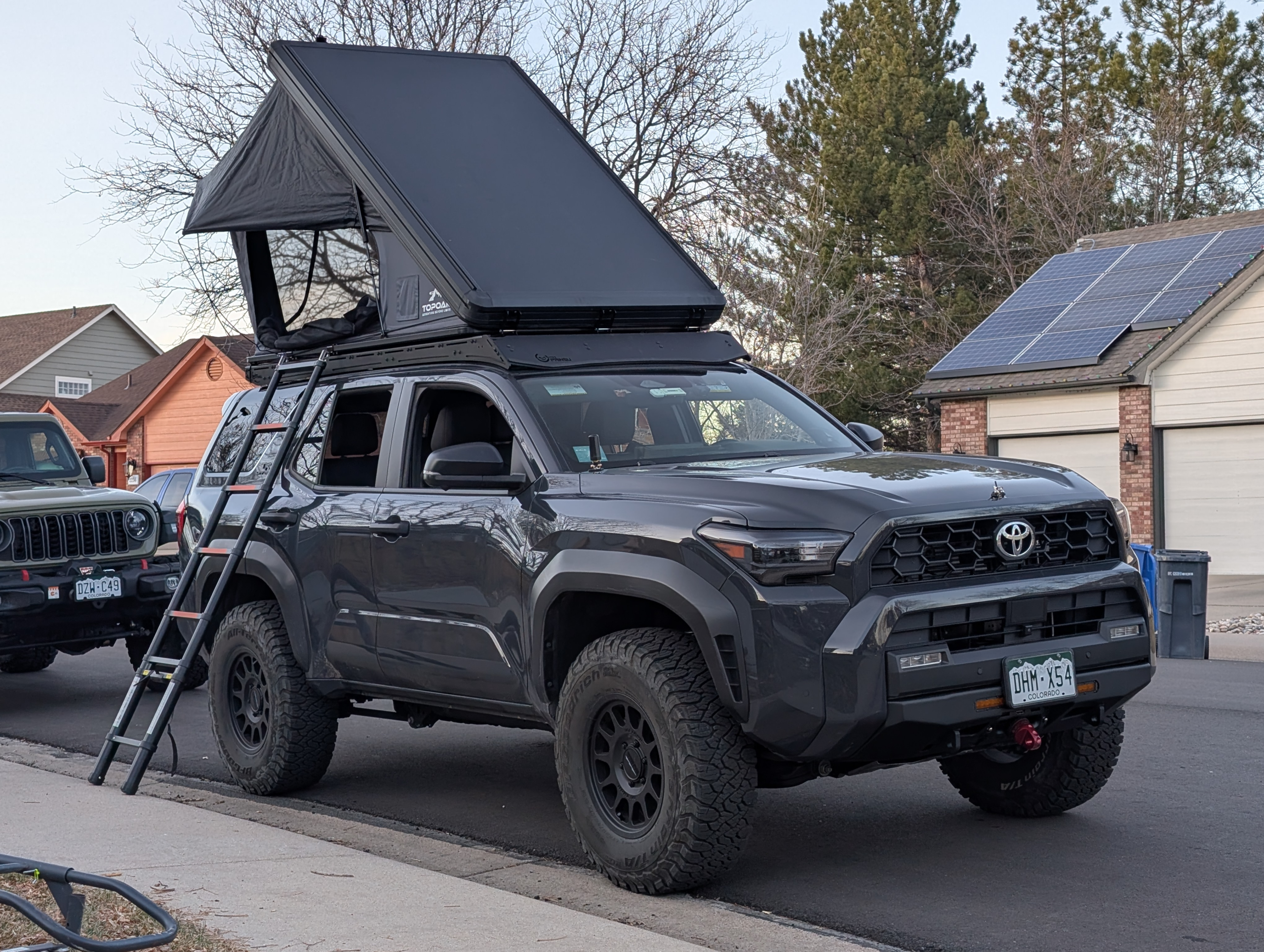
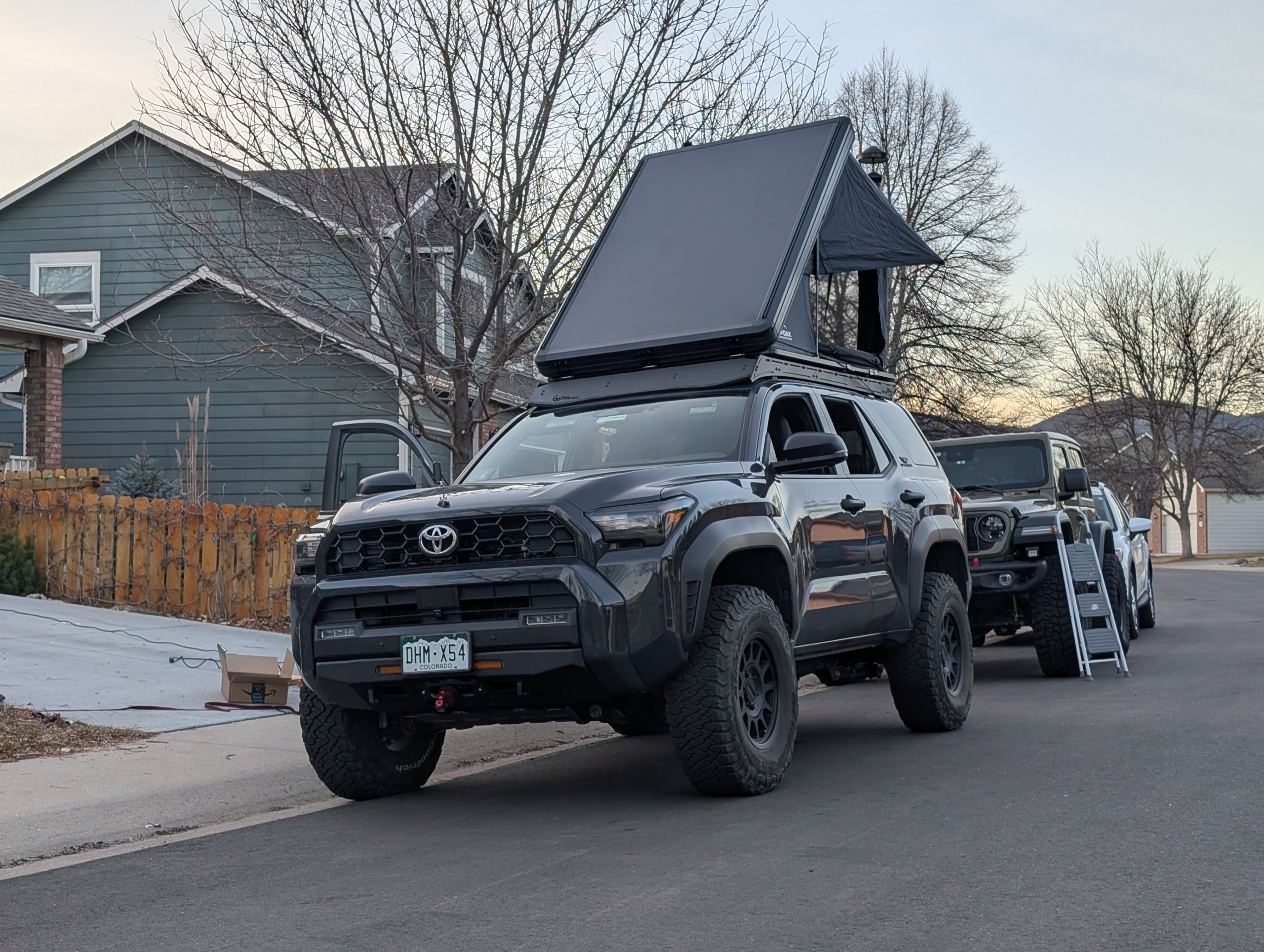
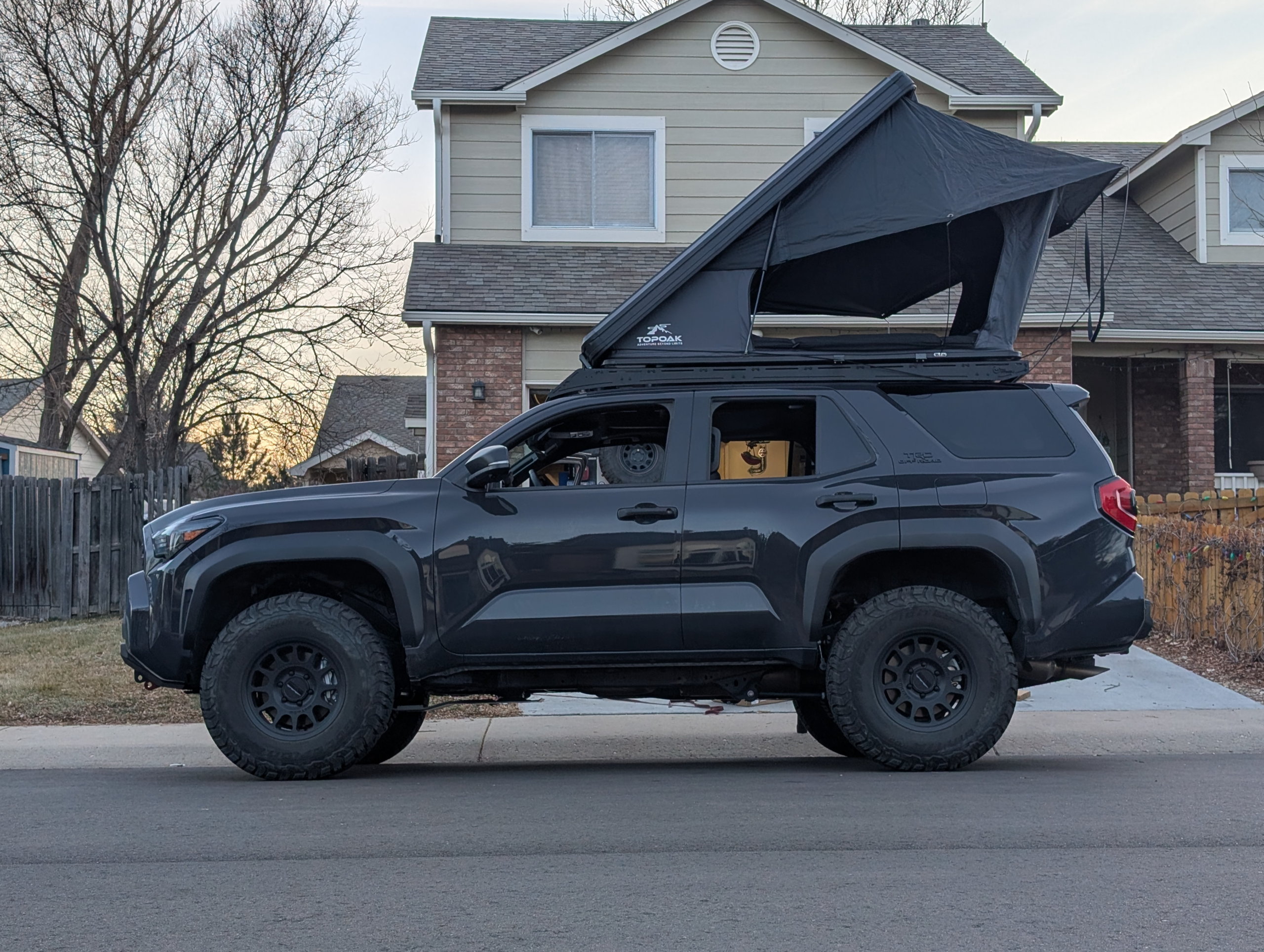
These are my original pictures with the RTT mounted a little too far back:
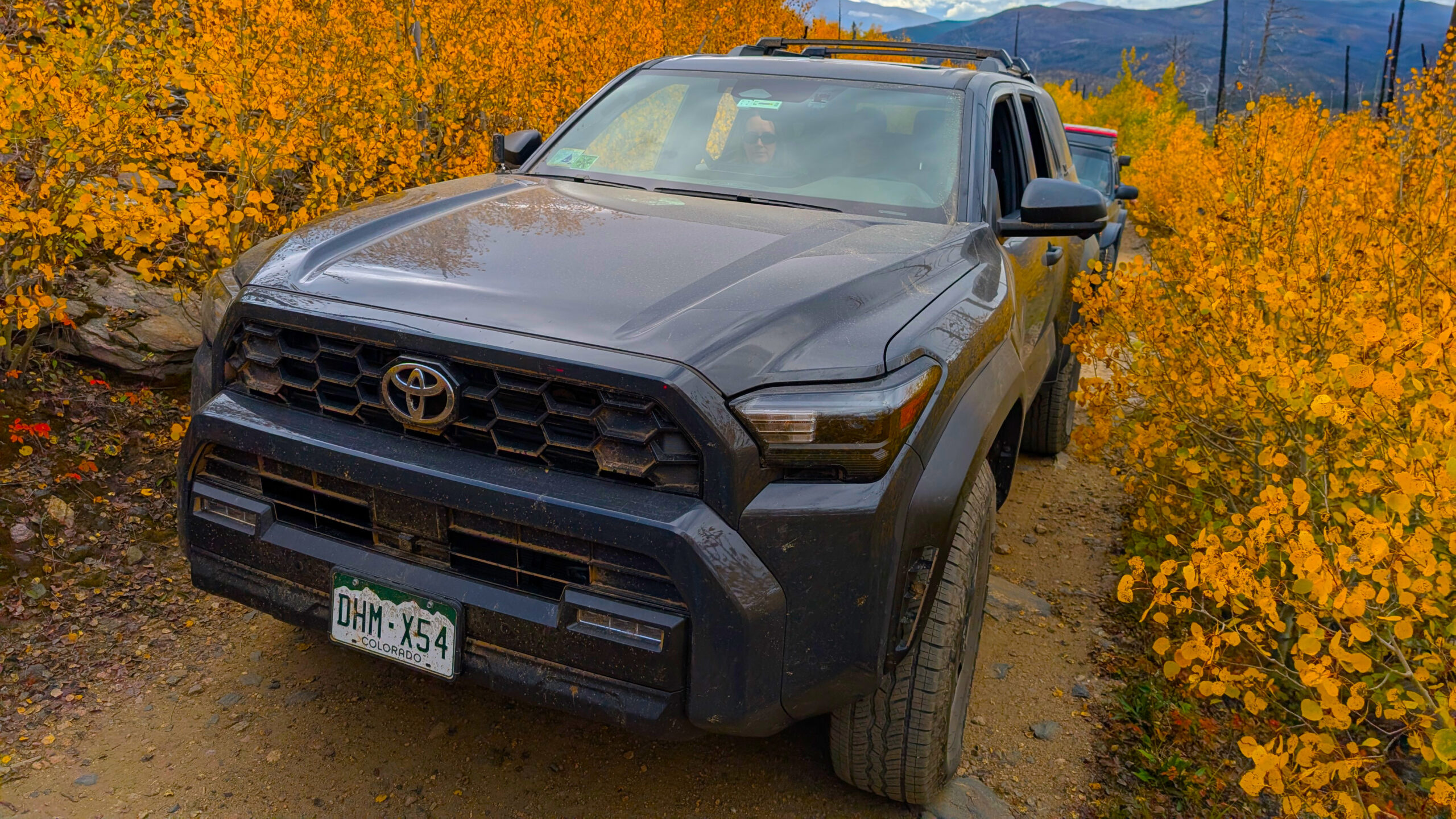
Here’s what it looks like now, showing the positioning and backer rod: